THE NEXT GENERATION: IT’S TIME FOR WWE TO MOVE FORWARD
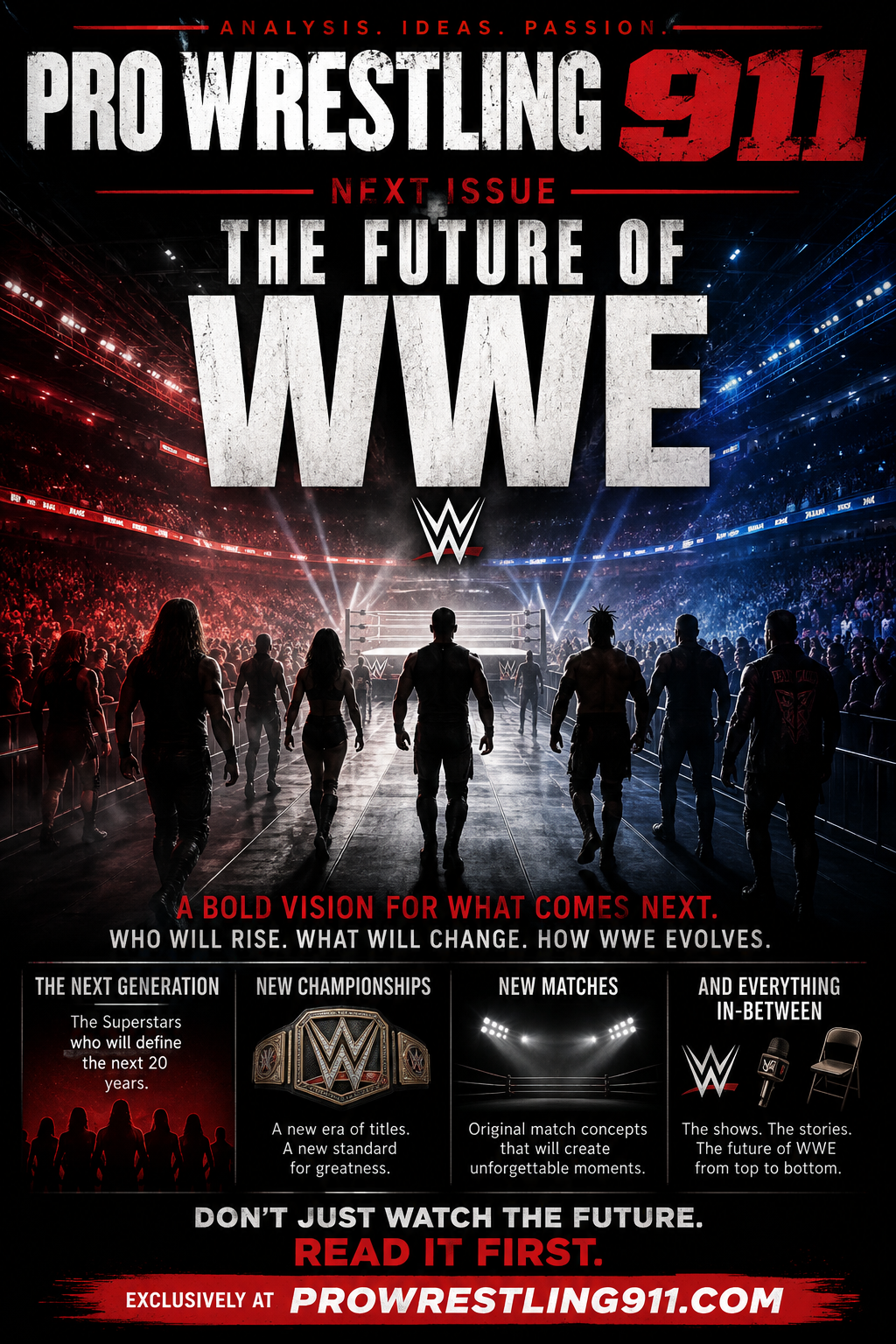
WWE is overdue for a true generational shift. For decades, each era was defined by new stars who eventually took control of the company, but today too many younger wrestlers are still playing second fiddle to veterans and nostalgia acts from previous generations.
The talent is already there. Oba Femi, Dominik Mysterio, Trick Williams, Carmelo Hayes, Tiffany Stratton, Stephanie Vaquer and many others have the potential to define WWE for the next 10–20 years. What they need is the opportunity to become the present instead of constantly being labeled the future.
By WrestleMania 44, WWE should look dramatically different, with the overwhelming majority of the card made up of wrestlers competing in their first or second WrestleMania. Veterans can still have a place, but their role should increasingly be to elevate the next generation rather than occupy the spotlight.
WWE doesn’t need to recreate the stars of the past. It needs to create new stars, new rivalries, new championships, new ma
What’s the verdict?
THE NEXT GENERATION: IT’S TIME FOR WWE TO MOVE FORWARD
At 48 years old, I have had the privilege of watching professional wrestling change several times.
Not just watching wrestlers come and go. Not just watching championships change hands, companies change names or television shows move from one network to another.
I have watched entire generations of professional wrestling rise, dominate and eventually give way to something new.
I watched the Golden Era, when professional wrestling was populated by characters who seemed larger than life because, as a fan, you could almost convince yourself that these people actually existed outside the wrestling business exactly as they appeared on television.
Hulk Hogan wasn’t Terry Bollea playing Hulk Hogan.
He was Hulk Hogan.
“Macho Man” Randy Savage didn’t seem like a guy who went backstage after his promo, relaxed and started speaking normally.
You believed Randy Savage probably ordered breakfast the same way he cut a promo.
Andre the Giant wasn’t simply an unusually large professional wrestler. He was presented as an attraction unlike anything else in the world.
Roddy Piper seemed legitimately insane.
The Iron Sheik seemed like he genuinely despised America.
The Ultimate Warrior apparently came from another dimension where everyone communicated by screaming about spaceships and loading rocket fuel into their veins.
It was ridiculous.
It was excessive.
It was completely over the top.
And it was fucking glorious.
Those wrestlers weren’t trying to convince you they were ordinary people.
They were trying to convince you they were anything but ordinary.
Then wrestling changed.
THE NEW GENERATION
As the stars of the 1980s began disappearing, WWE—then WWF—needed something different.
And we got it.
Bret “Hit Man” Hart.
Shawn Michaels.
Yokozuna.
Razor Ramon.
Diesel.
The Undertaker.
Owen Hart.
The British Bulldog.
Lex Luger.
The New Generation wasn’t simply Hulk Hogan’s WWF with different people occupying the same positions.
The wrestling changed.
The presentation changed.
The athletes changed.
The expectations changed.
Bret Hart wasn’t Hulk Hogan.
He didn’t need to be.
Shawn Michaels wasn’t Randy Savage.
He didn’t need to be.
Razor Ramon wasn’t Roddy Piper.
He didn’t need to be.
They were allowed to establish identities of their own.
And some of the people who emerged during that transitional period would become essential pieces of what came next.
Because wrestling changed again.
And this time, it exploded.
THE ATTITUDE ERA
There is a reason so many wrestling fans continue talking about the Attitude Era decades later.
Yes, nostalgia plays a role.
Of course it does.
Every generation eventually romanticizes the entertainment it grew up watching.
But nostalgia alone doesn’t explain what happened during that period.
The Attitude Era produced something wrestling desperately needs periodically:
new icons.
“Stone Cold” Steve Austin didn’t become successful because WWE spent years protecting Hulk Hogan’s position above him.
The Rock didn’t become one of the biggest stars in entertainment because WWE decided he should remain underneath the stars of the previous generation.
Triple H wasn’t permanently stuck wrestling aging legends while somebody else occupied the main event.
Mick Foley wasn’t told that he needed to wait until everybody from the previous decade decided they were finished.
And The Undertaker—one of the rare performers capable of successfully crossing multiple generations—was allowed to evolve.
The Undertaker of 1999 wasn’t exactly the Undertaker of 1991.
The character changed.
The presentation changed.
The performer changed with wrestling.
That matters.
Because the Attitude Era wasn’t successful simply because WWE suddenly allowed people to swear, bleed and hit each other with chairs.
It succeeded because WWE allowed a new generation to become the generation.
Austin wasn’t “one of the young guys.”
He became Stone Cold Steve Austin.
The Rock wasn’t “a future main-eventer.”
He became The Rock.
Those distinctions matter.
Eventually, though, even that generation began moving aside.
And another one arrived.
RUTHLESS AGGRESSION
John Cena.
Randy Orton.
Brock Lesnar.
Batista.
Edge.
Rey Mysterio.
Those names didn’t immediately replace everyone who came before them.
That’s not how transitions work.
Triple H remained important.
The Undertaker remained important.
Shawn Michaels returned and remained important.
Kurt Angle remained important.
Chris Jericho remained important.
There was overlap.
There should always be overlap.
Professional wrestling shouldn’t operate like Logan’s Run, where everybody reaches a certain age and WWE immediately launches them into the sun.
Veterans have value.
Legends have value.
Established stars have tremendous value.
But eventually something happened.
John Cena stopped being “the future.”
He became WWE.
Randy Orton stopped being the young guy from Evolution.
He became Randy fucking Orton.
Edge became a legitimate main-event star.
Batista became a legitimate main-event star.
Brock Lesnar became an attraction unlike almost anybody WWE had produced before him.
The transition happened.
The younger generation wasn’t simply allowed into WWE.
They were eventually allowed to inherit WWE.
That is the part I believe has been missing.
THE ERA THAT NEVER REALLY ENDED
People have different names for everything that came afterward.
The PG Era.
The Reality Era.
The Network Era.
The New Era.
The Triple H Era.
Pick whichever label you prefer.
Personally, I look at much of the PG Era as a watered-down continuation of Ruthless Aggression.
The presentation changed.
The content became safer.
The company became increasingly corporate.
But for a very long time, the people positioned as the biggest stars remained familiar.
And then something else started happening.
WWE became increasingly obsessed with its own past.
At first, it was fun.
A legend returned.
The music hit.
The crowd exploded.
Everyone got their nostalgia moment.
There is absolutely nothing wrong with that.
Hell, I’m 48 years old. I understand nostalgia better than most.
Play the glass breaking unexpectedly and I’m looking at the entrance just like everybody else.
Hit The Undertaker’s gong and the entire building changes.
Have The Rock walk through that curtain and you’re going to get a reaction.
That’s what legends are supposed to do.
But nostalgia is supposed to be a special attraction.
It shouldn’t become the foundation of the product.
Somewhere along the way, WWE became extremely good at producing future stars and strangely hesitant about actually letting the future arrive.
THE NXT PROBLEM
This is where NXT becomes important.
For years WWE has operated what should theoretically be the greatest developmental system professional wrestling has ever seen.
Wrestlers arrive in NXT.
They develop characters.
They improve in the ring.
They establish connections with audiences.
They win championships.
They headline shows.
They become stars.
Fans watch them and say:
“That person is going to be huge on the main roster.”
Then the call-up happens.
The music hits on Raw or SmackDown.
Everyone gets excited.
And then…
nothing.
Maybe they get an initial push.
Maybe they enter a feud.
Maybe they spend a few months hovering around the mid-card.
Maybe creative doesn’t immediately know what to do with them.
Maybe somebody gets injured.
Maybe plans change.
And eventually another returning veteran needs an opponent.
Another legend needs a WrestleMania match.
Another established star needs something to do.
Another nostalgia act returns.
And the person WWE spent years developing becomes another name on the roster.
Not everyone coming through NXT should become world champion.
Obviously.
That would be ridiculous.
Some wrestlers simply aren’t going to connect on the main roster.
Some characters don’t translate.
Some people reach their ceiling.
That’s professional wrestling.
But when it happens repeatedly, eventually you have to ask whether the problem is the talent or the system.
Because WWE doesn’t currently have a talent shortage.
WWE has a spotlight allocation problem.
THE NEXT GENERATION IS ALREADY HERE
That’s what makes this so frustrating.
WWE doesn’t need to search the world for its future.
The future is standing backstage waiting for somebody to get the hell out of the way.
Look at Oba Femi.
Brock Lesnar has publicly identified Oba as someone he sees tremendous potential in.
You don’t need to be a wrestling genius to understand why.
Look at him.
Watch him.
Listen to the crowd.
Oba Femi doesn’t look like someone WWE needs to spend five years convincing us could become a main-event star.
He looks like a main-event star WWE hasn’t fully unleashed yet.
There is a difference.
Then look at Dominik Mysterio.
Think about how absurd his progression has been.
He entered WWE with an enormous disadvantage in one respect: everybody knew exactly why he was there.
He’s Rey Mysterio’s son.
That could have defined his entire career.
Instead, Dominik found something of his own.
He became one of the most naturally hated wrestlers in WWE.
Not “cool heel” hated.
Not “we’re booing you because we’re supposed to, but secretly we love you” hated.
The guy could walk into a library and get booed.
That’s valuable.
And he’s still young enough that WWE could potentially have another decade-plus of Dominik Mysterio operating at a high level.
Trick Williams has charisma that can’t be manufactured.
You either have that connection with an audience or you don’t.
Carmelo Hayes has the athletic ability and confidence to become one of the defining performers of his generation.
Tiffany Stratton has already demonstrated that she can walk into a major WWE environment and look like she belongs there.
Stephanie Vaquer has the presence and ability to become one of the defining women of the next era.
And those are only some of the obvious names.
There are men and women throughout WWE and NXT right now who could become the foundation of the company for the next ten, fifteen or twenty years.
The question isn’t whether the talent exists.
The question is whether WWE is willing to give them WWE.
THERE HAS TO BE A MOMENT WHEN “NEXT” BECOMES “NOW”
Every generation of wrestling has prospects.
Every generation has young wrestlers.
Every generation has people commentators describe as “the future.”
Eventually, though, somebody has to stop being the future.
They have to become the present.
That transition cannot happen if the biggest opportunities continually return to the same people.
You cannot tell an audience that someone is a future main-event star while consistently positioning them beneath someone whose main-event career began twenty years ago.
At some point, the audience believes what you show them.
If the veteran always gets the biggest match, the veteran is the bigger star.
If the veteran always gets the WrestleMania spotlight, the veteran is more important.
If the veteran always gets the championship opportunity, the veteran matters more.
You can call somebody “the future” during commentary as many times as you want.
Booking speaks louder.
THIS ISN’T ABOUT DISRESPECTING LEGENDS
This is where I want to make something extremely clear.
I’m not telling Randy Orton to retire.
I’m not telling John Cena he should never appear.
I’m not saying Brock Lesnar has no value.
I’m not saying WWE should erase its history.
I’m arguing almost the exact opposite.
Legends become more valuable when you stop treating them like ordinary roster members.
The Undertaker eventually understood this beautifully.
Toward the latter portion of his career, seeing The Undertaker meant something.
You weren’t getting Undertaker wrestling every Monday night.
When the gong hit, something important was happening.
That’s how legends should work.
Imagine Randy Orton appearing three or four times during an entire year rather than being another guy regularly cycling through television.
Suddenly that music hitting means something again.
Imagine an established legend returning specifically because some arrogant young champion has spent six months claiming nobody from the past could hang with him.
That’s a story.
That’s an attraction.
That’s a reason.
But if yesterday’s stars are constantly present, they aren’t nostalgia anymore.
They’re just the roster.
And if they’re still the roster, when exactly does the next generation get its turn?
THE VETERANS SHOULD CREATE THE NEXT GENERATION
There is another role established wrestlers can play, and it may be more important than simply stepping aside.
They can make people.
Professional wrestling has always relied on this.
Eventually somebody established has to look across the ring at somebody younger and say:
You’re next.
Not Goldberg “you’re next.”
Actually next.
The veteran has credibility.
The younger wrestler needs credibility.
Put them together correctly and credibility transfers.
That’s one of the oldest mechanisms in professional wrestling.
Imagine Randy Orton spending months dismissing Carmelo Hayes.
Not because Orton needs another championship.
Because Carmelo needs Randy Orton.
Then Carmelo beats him.
Clean.
Center of the ring.
No interference.
No distraction.
No bullshit.
Orton doesn’t disappear because he’s suddenly worthless.
He fulfilled one of the most important roles an established star can fulfill.
He helped create the next one.
Imagine Finn Bálor eventually reaching the point where his job isn’t proving that he can still wrestle with the younger generation.
Nobody needs proof.
His job becomes finding the person who can beat him.
That’s how wrestling regenerates itself.
The old guard doesn’t have to be destroyed.
It has to pass something forward.
WRESTLEMANIA 44 SHOULD BE THE LINE IN THE SAND
And that brings me to WrestleMania 44.
Hopefully, Nashville, Tennessee.
Yes, I’m putting that out into the universe now.
Give Nashville WrestleMania 44.
But wherever WrestleMania 44 ultimately takes place, I want that show to represent something bigger.
I want WrestleMania 44 to look like WWE finally crossed the bridge into its next generation.
My target?
Ninety-five percent of the people competing at WrestleMania 44 should be appearing in either their first or second WrestleMania.
Think about what that would mean.
An almost entirely fresh WrestleMania card.
New main events.
New championship rivalries.
New tag teams.
New women’s rivalries.
New grudges.
New dream matches.
New moments.
New people getting the entrance where you think:
Holy shit. WWE sees this person as a star.
Of course there would be exceptions.
There should be.
Dominik Mysterio would already have WrestleMania experience.
Gunther would.
Finn Bálor would.
There are other wrestlers who could remain important pieces of the transition.
Again, generations overlap.
That’s healthy.
But here’s the standard I would use:
By WrestleMania 44, nobody competing should have wrestled at a WrestleMania with “twenty” in its name.
And really, we should be reaching the point where even WrestleManias with “thirty” in their name are becoming increasingly rare on the active card.
That’s not an insult.
That’s time.
If someone wrestled at WrestleMania XX, they competed at WrestleMania in 2004.
WrestleMania 44 will take place in 2028.
Twenty-four years later.
At some point professional wrestling has to accept the passage of time.
A wrestler can still be physically capable.
They can still be entertaining.
They can still draw money.
They can still have something to contribute.
None of that means they should continue occupying one of the limited positions available on the biggest wrestling show in the world.
WrestleMania should showcase WWE’s present.
Not function primarily as a reunion for its past.
IMAGINE A WRESTLEMANIA THAT FEELS UNKNOWN AGAIN
This is what excites me most.
When was the last time you looked at a WrestleMania card and genuinely felt like you were looking at an entirely new WWE?
Not another variation of combinations we’ve already seen.
Not another sequel.
Not another veteran returning.
Not another match built around history.
Something genuinely new.
Imagine reaching WrestleMania 44 and realizing that half the card couldn’t have existed three years earlier.
That’s exciting.
Imagine the opening video package introducing people who will define WWE for the next decade rather than spending half of it reminding us what happened twenty years ago.
Imagine a kid watching WrestleMania 44 and discovering his Hulk Hogan.
His Stone Cold.
His Rock.
His John Cena.
His Undertaker.
His Shawn Michaels.
His favorite wrestler shouldn’t necessarily be my favorite wrestler from 1998.
He deserves his own.
That’s something wrestling fans sometimes forget.
We become so protective of the eras we loved that we unintentionally deny younger fans the opportunity to experience their own version of what we experienced.
I don’t want WWE endlessly recreating my childhood.
I already had my childhood.
Give the next generation theirs.
STOP LOOKING FOR THE NEXT JOHN CENA
And there’s another mistake WWE needs to avoid.
Don’t look for the next John Cena.
Don’t look for the next Rock.
Don’t look for the next Undertaker.
Don’t look for the next Brock Lesnar.
Look for the first Oba Femi.
The first Trick Williams.
The first Carmelo Hayes.
The first Tiffany Stratton.
The first Stephanie Vaquer.
The first whoever the hell walks through the Performance Center tomorrow and changes everything.
Wrestling history isn’t created by successfully reproducing something that already existed.
Nobody looked at Steve Austin in 1996 and said:
“Let’s make him the next Hulk Hogan.”
Thank God.
The Rock didn’t become successful because WWE decided he should imitate Randy Savage.
The Undertaker certainly wasn’t created by asking how WWE could recreate Andre the Giant.
The greatest wrestling stars become archetypes after they become successful.
Then everybody spends twenty years trying to find another one.
Stop.
Let people become something we haven’t seen.
LET THEM FAIL
That requires patience.
Some pushes won’t work.
Good.
Some characters will bomb.
Fine.
Some people WWE believes will become enormous stars won’t connect.
That’s going to happen.
You know what the solution isn’t?
Running back to the same six established wrestlers every time something doesn’t immediately work.
Developing stars requires allowing them to fail.
The Rock failed spectacularly at first.
People hated Rocky Maivia.
Imagine if WWE had responded by deciding Dwayne Johnson simply wasn’t main-event material.
Instead, failure created something better.
That’s development.
Sometimes the bad gimmick teaches you what the good gimmick needs to be.
Sometimes the failed babyface becomes an incredible heel.
Sometimes the heel becomes so entertaining that the audience turns them babyface.
Sometimes somebody WWE sees as a mid-card wrestler becomes undeniable.
But none of that happens if creative becomes terrified whenever the ratings fluctuate and immediately reaches for nostalgia.
NEW STARS CREATE NEW MATCHES
There is another reason WWE desperately needs this transition.
We’ve seen the old combinations.
That’s not criticism.
It’s mathematics.
When people spend fifteen or twenty years together in the same company, eventually most of the obvious matches happen.
The next generation resets the board.
Suddenly everything becomes possible again.
Oba Femi versus Trick Williams can develop completely differently five years from now than it does today.
Carmelo Hayes could spend years building toward somebody we haven’t even met yet.
Dominik Mysterio could eventually become the established veteran trying to stop some 22-year-old kid from taking his position.
Tiffany Stratton and Stephanie Vaquer could become foundational pieces of a women’s division that eventually introduces another generation underneath them.
That’s how wrestling works.
Today’s prospect becomes tomorrow’s champion.
Tomorrow’s champion becomes the veteran.
The veteran eventually creates the next prospect.
Then the cycle begins again.
The problem isn’t getting older.
The problem is refusing to let the cycle continue.
THE CHAMPIONSHIPS SHOULD CHANGE WITH THEM
And if we’re truly entering a Next Generation, why should everything else remain frozen?
Why should the new generation inherit somebody else’s championship structure?
Why should they inherit somebody else’s match concepts?
Why should they inherit somebody else’s presentation?
Why should they inherit somebody else’s WrestleMania?
If WWE is going to begin a genuine new era, then make it feel like one.
New stars.
New championships.
New match concepts.
New traditions.
New pathways to WrestleMania.
New visual identities.
New ways of determining challengers.
New reasons for matches to matter.
Keep what works.
Honor what came before.
But stop treating everything from wrestling history as sacred simply because it’s old.
At some point somebody invented the Royal Rumble.
At some point somebody invented WrestleMania.
At some point somebody decided a giant steel cage surrounding the ring could become Hell in a Cell.
At some point Money in the Bank didn’t exist.
At some point Elimination Chamber didn’t exist.
Every tradition was new once.
So create some new traditions.
Give this generation something that belongs to them.
WWE DOESN’T NEED ANOTHER “ERA” MARKETING CAMPAIGN
This is important.
Don’t announce it.
Don’t put “THE NEXT GENERATION ERA” on a T-shirt.
Don’t have commentators say “Welcome to the Next Generation Era” seventeen times during Raw.
Just do it.
Let fans realize it happened.
One day we look at the Crown Jewel Champion and he’s someone who wasn’t on the main roster five years ago.
We look at the women’s division and realize almost every major rivalry is fresh.
We look at WrestleMania and there are fifteen people making their WrestleMania debuts.
We look at the Royal Rumble and genuinely don’t know who is winning because eight different people could realistically headline WrestleMania.
We look at the mid-card and see people being prepared to become main-eventers instead of simply occupying the mid-card indefinitely.
Then somebody says:
“When did WWE change this much?”
That’s when you know you’ve actually created an era.
Eras aren’t named into existence.
They’re recognized afterward.
THE ROYAL RUMBLE SHOULD FEEL LIKE THE FUTURE IS FIGHTING FOR WRESTLEMANIA
Imagine what this philosophy does to the Royal Rumble.
Instead of wondering which established star is returning to win another WrestleMania opportunity, you’re watching thirty wrestlers who genuinely believe this could be the night their career changes.
The final four shouldn’t feel predetermined because only one person has enough star power to headline WrestleMania.
The final four should make you nervous.
Oba Femi.
Trick Williams.
Carmelo Hayes.
Somebody who isn’t even on our radar yet.
Now choose.
That’s wrestling.
And whoever wins doesn’t receive a ceremonial achievement.
They become the person WWE has chosen to trust with WrestleMania.
That’s how stars are created.
SURVIVOR SERIES SHOULD MATTER AGAIN
The same philosophy applies throughout the calendar.
Survivor Series shouldn’t simply exist because November arrived.
Make surviving matter.
Make victories affect what happens next.
Let the road toward WrestleMania begin there.
Let wrestlers earn advancement.
Let alliances form unexpectedly.
Let enemies be forced together.
Let somebody survive against impossible odds and suddenly become someone the audience looks at differently.
Then carry that momentum into Royal Rumble.
Then King of the Ring.
Then WrestleMania.
Not because WWE needs to become a sterile sports tournament.
Stories still matter.
Personal rivalries still matter.
Championship challenges between major events still matter.
Wrestling needs emotion.
But structure gives those emotions consequences.
KING OF THE RING SHOULD MEAN SOMETHING
And if we’re rebuilding WWE for the next generation, restore the things that used to matter.
King of the Ring should happen in one night.
A tournament should feel like a tournament.
Someone should enter that event knowing they’re going to have to survive multiple matches to reach the end.
Winning should change a career.
Not because the winner receives a goofy crown and spends six months pretending to be medieval royalty.
Because surviving King of the Ring should tell the audience:
This person is different.
That’s how you create accomplishments.
Then years later, when somebody says a wrestler is a three-time King of the Ring winner, it means something.
History starts accumulating again.
And eventually those accomplishments belong to this generation rather than constantly referencing the previous one.
THE WOMEN CANNOT BE AN AFTERTHOUGHT
And when I say Next Generation, I’m talking about the entire roster.
For too much of wrestling history, “the future of wrestling” effectively meant the future of men’s wrestling with the women added afterward.
Not anymore.
Some of WWE’s most interesting potential future stars are women.
The next generation of WWE cannot simply give women more matches.
It needs to give them history.
Rivalries that last years.
Championship reigns people remember.
WrestleMania main events that aren’t treated as historical novelties.
Characters with depth.
Heels people despise.
Babyfaces people genuinely love.
Women who become synonymous with an era.
Twenty years from now, fans should argue about Tiffany Stratton, Stephanie Vaquer and whoever follows them the same way fans argue about the greatest male wrestlers today.
That’s when equality in presentation becomes real.
Not when somebody announces it.
When nobody thinks about it anymore.
WRESTLING NEEDS YOUNG FANS TO HAVE OLD MEMORIES SOMEDAY
Ultimately, that’s what this entire argument is about.
Memory.
I can remember what wrestling felt like during different periods of my life.
I remember larger-than-life characters.
I remember the New Generation.
I remember watching wrestling transform during the Monday Night Wars.
I remember Austin.
I remember The Rock.
I remember The Undertaker evolving.
I remember the arrival of Cena, Orton, Batista and Lesnar.
Those memories mean something because those eras were allowed to exist.
They weren’t simply continuations of what came before.
Today’s younger fans deserve the same thing.
Twenty years from now, somebody should be writing about the night Oba Femi became King of the Ring.
Somebody should remember exactly where they were when Trick Williams won his first major championship.
Somebody should argue that Carmelo Hayes was underrated.
Somebody should insist Tiffany Stratton was the greatest of her generation.
Somebody should hear an entrance theme from 2028 and instantly become twelve years old again.
That’s what we’re supposed to be creating right now.
Memories.
Not reruns.
NOSTALGIA SHOULD REMIND US WHY WE LOVE WRESTLING—NOT PREVENT WRESTLING FROM EVOLVING
I’ll always appreciate the wrestlers I grew up watching.
Always.
Hogan.
Savage.
Piper.
Andre.
Bret.
Shawn.
Austin.
Rock.
Undertaker.
Triple H.
Cena.
Orton.
Lesnar.
And dozens upon dozens of others.
They helped make professional wrestling what it is.
Nothing WWE does tomorrow takes that away.
That’s the beauty of wrestling history.
It’s already there.
I can watch it whenever I want.
What I cannot watch whenever I want is the future.
That has to be created.
And right now WWE has an opportunity that doesn’t come around often.
The roster is loaded with young talent.
The developmental system continues producing more.
The women’s division has extraordinary depth.
International talent is increasingly accessible.
Athletes are entering professional wrestling with abilities that would have seemed impossible thirty years ago.
WWE has the ingredients.
Now it needs the courage to cook the damn meal.
MOVE FORWARD
Professional wrestling has always survived because eventually it changes.
The Golden Era couldn’t last forever.
The New Generation couldn’t last forever.
The Attitude Era couldn’t last forever.
Ruthless Aggression couldn’t last forever.
And whatever we choose to call the era we’re currently watching can’t last forever either.
It shouldn’t.
That’s not failure.
That’s evolution.
The wrestlers who carried WWE for the last twenty years deserve respect.
They deserve Hall of Fame inductions.
They deserve occasional returns.
They deserve enormous reactions when their music hits.
They deserve the opportunity to help create the people who follow them.
But they don’t deserve permanent ownership of the spotlight.
Nobody does.
Because eventually every generation has to hear the same thing:
Thank you.
Now move over.
There are people waiting behind you.
Oba Femi.
Dominik Mysterio.
Trick Williams.
Carmelo Hayes.
Tiffany Stratton.
Stephanie Vaquer.
And countless others—some already standing in WWE rings, some developing in NXT, and some who haven’t even signed a WWE contract yet.
They shouldn’t spend the prime of their careers being introduced as the future.
Give them the championships.
Give them the rivalries.
Give them the Royal Rumble.
Give them King of the Ring.
Give them SummerSlam.
Give them Survivor Series.
Give them WrestleMania.
Give them opportunities to succeed.
Give them opportunities to fail.
Give them opportunities to become something none of us predicted.
And most importantly:
Give them WWE.
Because by the time WrestleMania 44 arrives, I don’t want to watch another celebration of the wrestling I already experienced.
I want to look at that ring and barely recognize the WWE I grew up watching.
I want new faces.
New champions.
New rivalries.
New traditions.
New match types.
New stars standing underneath the WrestleMania sign knowing that this company belongs to them now.
I want some kid watching that night to see his generation’s first true icon and not even realize it yet.
I want older fans like me to stop comparing every wrestler to somebody who came before them because the new generation has become too damn good to need the comparison.
And twenty years later, when those stars have become the nostalgia acts and another generation is standing behind them waiting for its opportunity, I hope WWE has the courage to do it all over again.
Because professional wrestling shouldn’t live in its past.
It should honor its past.
It should remember its past.
It should learn from its past.
But it must always build its future.
The Golden Era had its time.
The New Generation had its time.
The Attitude Era had its time.
Ruthless Aggression had its time.
Now?
It’s their turn.
Welcome to The Next Generation.
Add a Comment
Jump into the discussion. AI-seeded comments are clearly labeled; reader comments are not.
Add a Comment
Jump into the discussion. AI-seeded comments are clearly labeled; reader comments are not.