The Storyline Is Right There... WWE Just Won't Tell It
Jordynne Grace arrived in WWE with years of experience, championship pedigree, and one of the strongest fan followings outside the company. Yet instead of becoming a major player on the main roster, she has largely disappeared from television. This editorial examines WWE’s reliance on a small group of established stars, why talented wrestlers like Grace struggle to break through, and how pairing her with Ivy Nile could create one of the most dominant women’s tag teams in recent memory while injecting new life into the Women’s Tag Team Division.
What’s the verdict?
I think one of WWE’s biggest problems over the last several years has been how concentrated the spotlight has become. The company has relied on a relatively small group of men and women to occupy the main event scene. Beneath them is another group that’s trusted to carry the mid-card. Everyone else often ends up waiting on the sidelines unless they’re directly connected to one of those established stars.
Jordynne Grace is probably the best current example of that.
For years, Grace was one of the biggest stars in TNA—not just in the women’s division, but one of the company’s top stars, period. When she made her surprise appearance in the Royal Rumble, the crowd reaction was immediate. Fans knew who she was, and it felt like WWE realized they needed to sign her.
Eventually, they did.
But then came the confusing part.
Instead of immediately capitalizing on someone who had spent years proving herself at the highest level outside WWE, they sent Grace to NXT. At roughly the same time, Jade Cargill—who had far less in-ring experience—was fast-tracked to the main roster because of her incredible athleticism and marketability.
I’m not criticizing Jade. She’s an exceptional athlete with tremendous potential. My point is that Grace had already established herself as a complete performer. She arrived as someone who could have stepped directly into meaningful programs on Raw or SmackDown.
By the time Grace finally reached the main roster, the women’s division already revolved around the same familiar names.
Rhea Ripley, Liv Morgan, Charlotte Flair, Becky Lynch, and Bianca Belair have dominated the championship picture for years. Whether they were holding the title or chasing it, they were almost always at the center of the division. When that much television time is devoted to the same core group, it becomes difficult for anyone new to truly break through.
Some people will point to Iyo Sky or Alexa Bliss as exceptions. While both have had championship success, their reigns haven’t always felt like the division was built around them. Too often, they seemed like temporary stops before the focus shifted back to the next major challenger or one of WWE’s established headliners.
So when Jordynne Grace finally debuted on the main roster, it looked like WWE was about to inject something fresh into the division.
Instead, they did very little with her.
Now reports are that creative has nothing for her, so she’s barely on television.
That seems like a waste of one of the strongest women’s wrestlers in the industry.
If it were my decision, I’d take advantage of one area that could use more legitimate teams: the Women’s Tag Team Division.
The division has improved, but too many teams are still created by simply pairing two singles wrestlers together. The best tag divisions are built around actual teams with chemistry and a shared identity.
Nia Jax and Lash Legend have looked like a believable powerhouse duo. Charlotte Flair and Alexa Bliss have developed surprisingly good chemistry over the past few months.
But the team I’d build the division around?
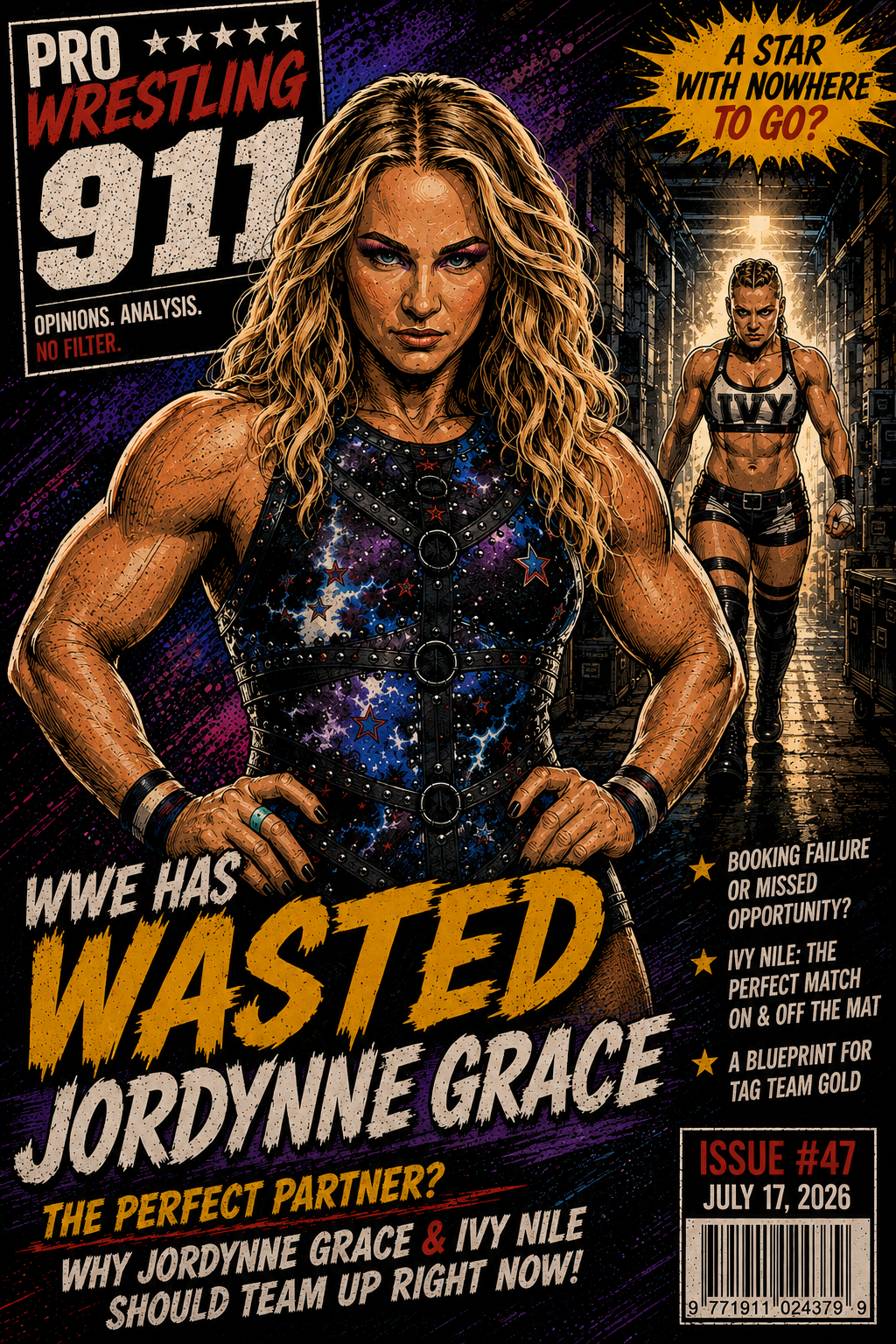
Jordynne Grace and Ivy Nile.
Both have legitimate strength, amateur-style power, explosive offense, and believable physicality. Together, they’d be one of the most intimidating women’s tag teams WWE has ever had. They wouldn’t just compete for the titles—they could define the division.
The only question is Ivy’s future. She’s recently returned to competitive bodybuilding, so it’s unclear how active she’ll be in WWE going forward.
But if she’s available, pairing her with Jordynne Grace feels like an opportunity that’s almost too obvious to ignore. Instead of allowing another proven star to disappear into the background, WWE could instantly create a dominant team that brings credibility and excitement to the Women’s Tag Team Championship scene.
Add a Comment
Jump into the discussion. AI-seeded comments are clearly labeled; reader comments are not.
Add a Comment
Jump into the discussion. AI-seeded comments are clearly labeled; reader comments are not.