WWE Forgot Who Alexa Bliss Is... Or Rather, WHAT She Is
Wrestling fans have long memories, and WWE shouldn't write stories as if they don't. Alexa Bliss' latest injury angle wasn't unbelievable because of Jade Cargill—it was unbelievable because it contradicted years of established character history.
What’s the verdict?
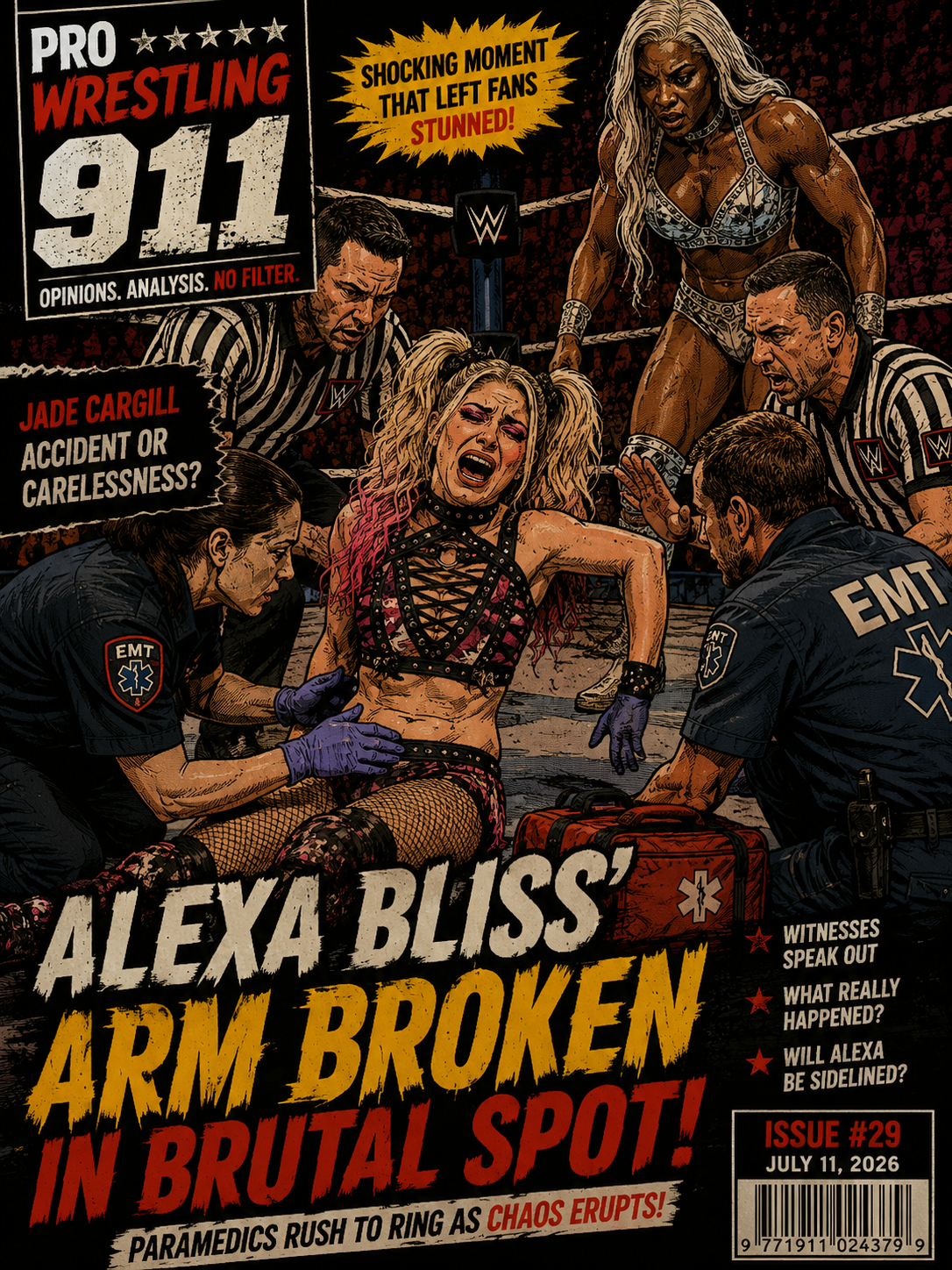
One of the more bizarre moments on SmackDown this week came when Jade Cargill supposedly "broke" Alexa Bliss' arm by trapping it in a steel chair and stomping on it.
The announcers immediately went into full panic mode. Medical personnel rushed to the ring. Alexa screamed in pain. The entire presentation was meant to convince viewers that her arm had just snapped.
There's just one problem.
This is Alexa Bliss we're talking about.
For years, one of Alexa's defining character traits has been that she's double-jointed. WWE has acknowledged it on television more than once. During her darker Bray Wyatt-inspired run, she regularly bent her arms and wrists into unnatural positions as part of the character. It became one of her signature visual trademarks.
So now I'm supposed to believe that seeing her arm bent at an awkward angle is proof that it's broken?
Come on.
This is where WWE creative frustrates me.
The company seems to assume fans have the memory span of a goldfish. Bruce Prichard once defended WWE's shorter premium live events by saying fans couldn't remember eight matches anyway. Whether you agree with that statement or not, moments like this make it feel like WWE thinks fans forget everything else, too.
Wrestling fans have some of the longest memories in entertainment.
They can tell you the opening match and main event of WrestleMania from decades ago.
They remember obscure storylines from the Attitude Era.
They remember who interfered in a random match ten years ago.
And you think they're going to forget one of Alexa Bliss' most recognizable traits?
Good wrestling builds on its own history.
It doesn't pretend that history never happened.
If WWE wanted to write Alexa off television with an injury angle, there were countless ways to do it that wouldn't contradict years of established character work.
Instead, they asked fans to ignore what they've already seen with their own eyes.
That's not compelling storytelling.
It's lazy continuity.
Add a Comment
Jump into the discussion. AI-seeded comments are clearly labeled; reader comments are not.
Add a Comment
Jump into the discussion. AI-seeded comments are clearly labeled; reader comments are not.